
Live Edge Bowls
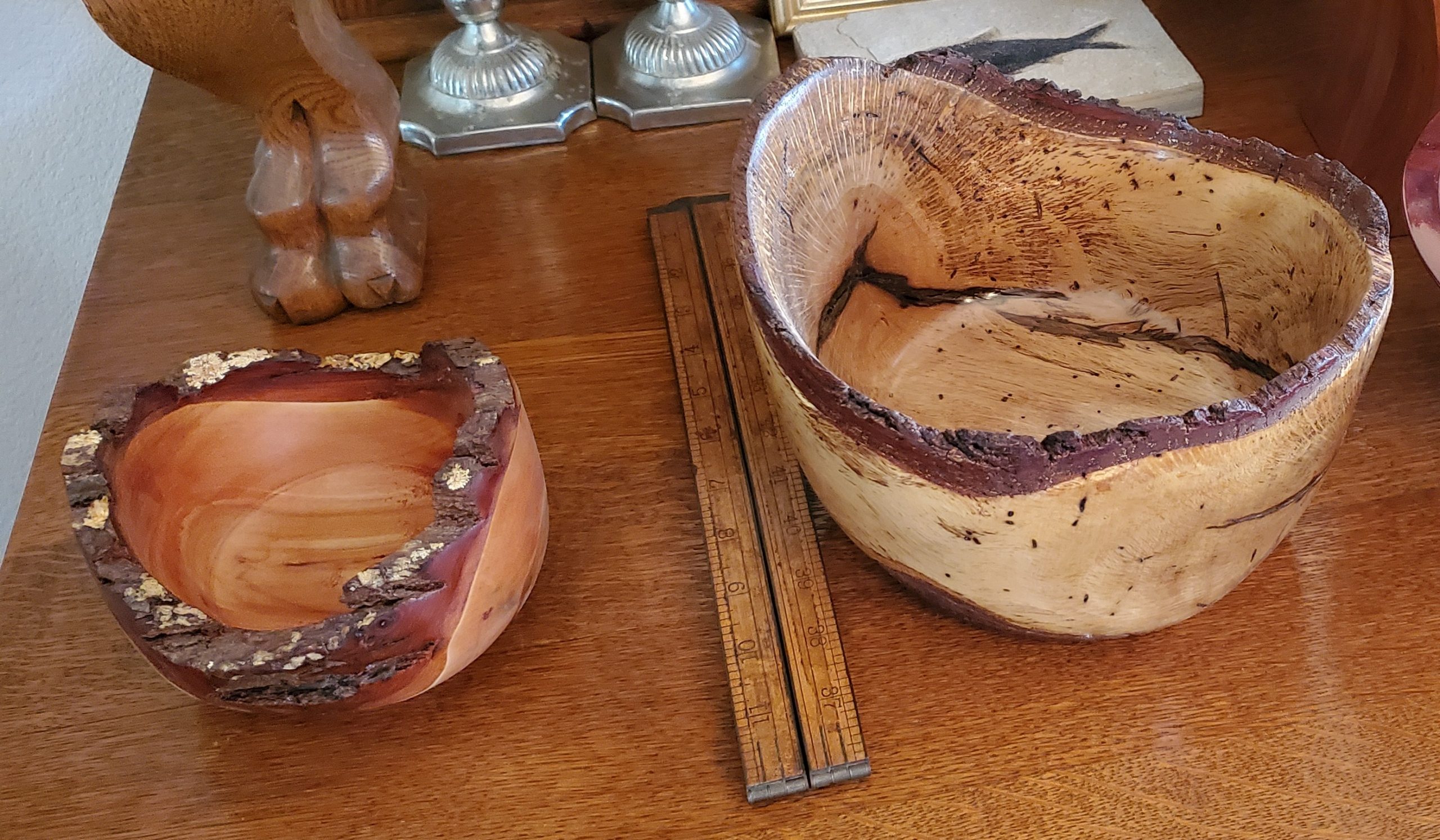
Carolina willow from my back yard on the left, and a live oak piece I found by the side of the road.
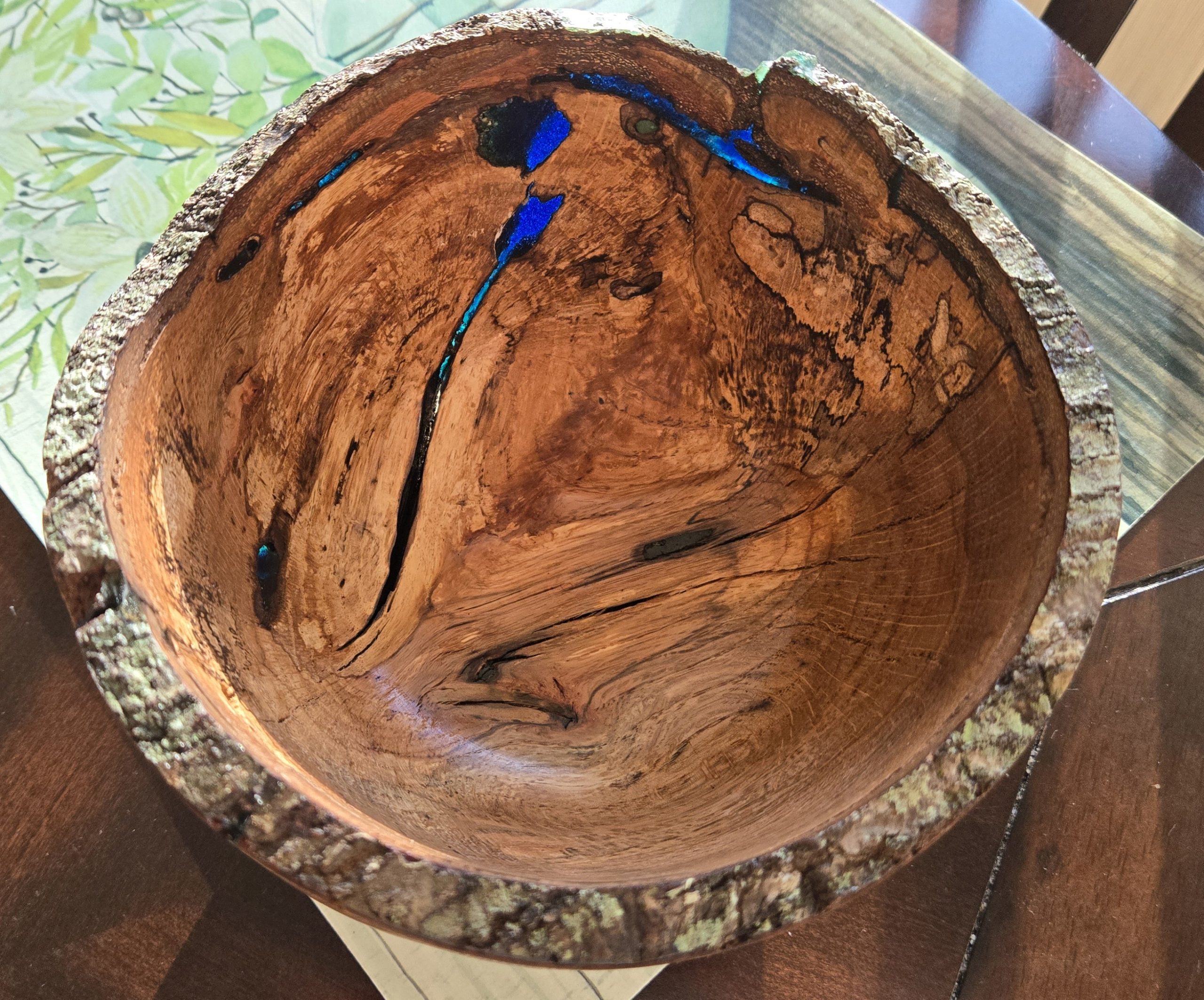
A Very Rotted Piece of Live Oak
When a live oak tree in my yard died and had to be cut down I saved this rotted and worm-infested piece. There were so many cracks and worm holes that I had to fill it with epoxy to keep it togethere while turning. See the process below:
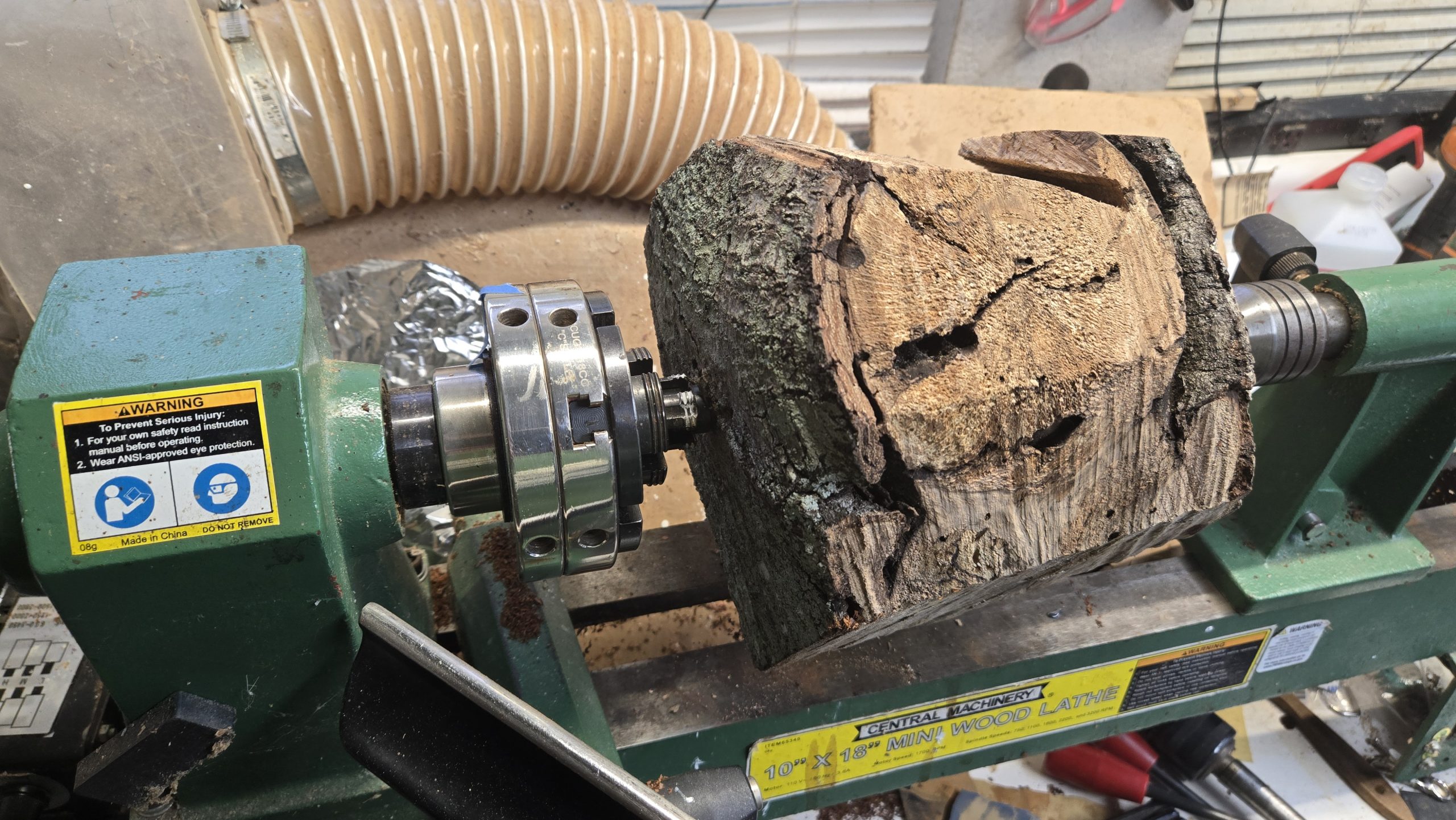
1) Starting Out
The piece is cut to rough shape with a chainsaw, a threaded piece is screwed into the bark side, and it’s monted in the lathe.
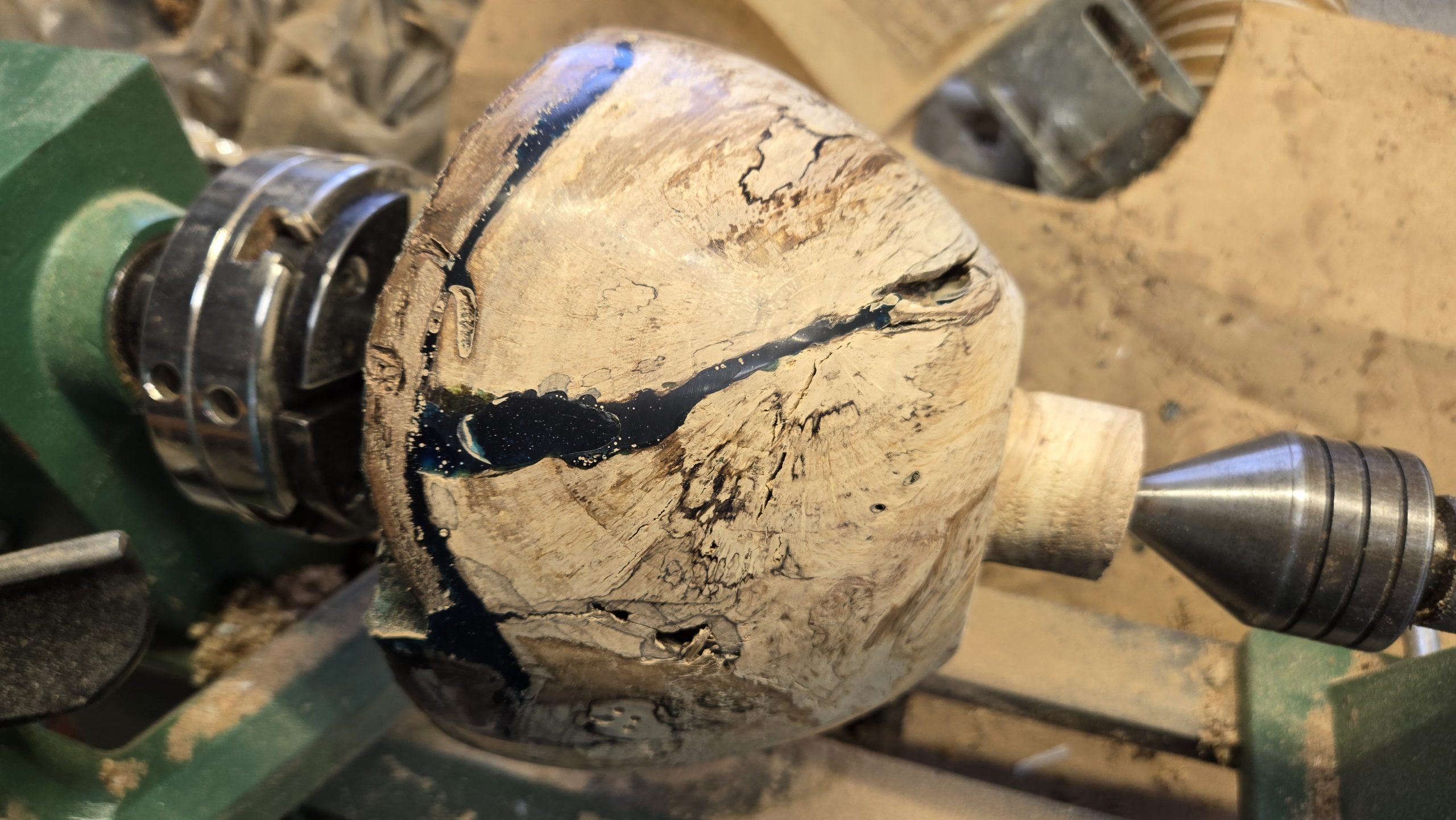
2) Shape the Outside
The outside is turned to shape, with a cylinder left on the bottom to hold it when the inside is hollowed out.
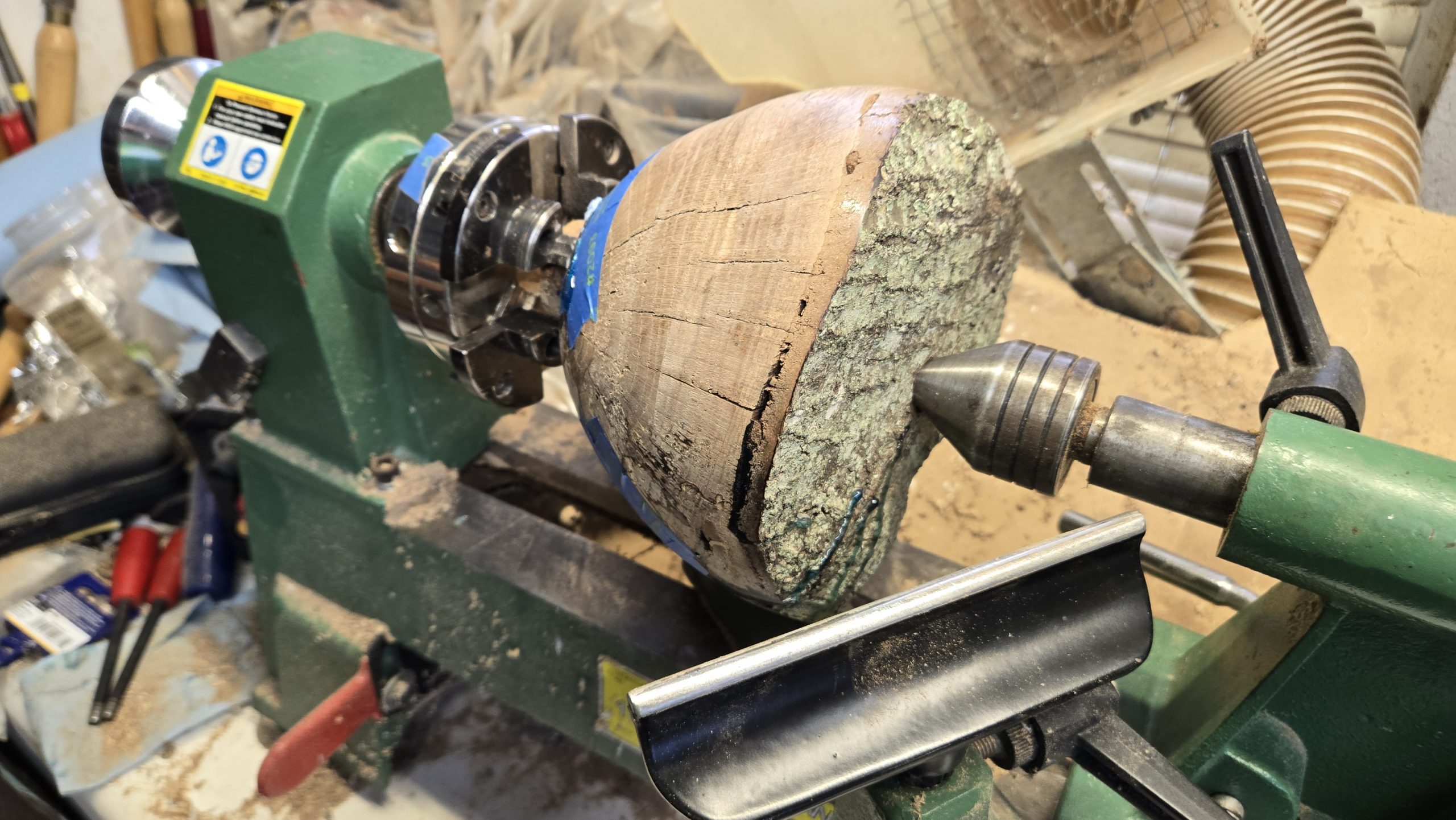
3) Turn the Log Around in the Lathe
The log is turned around and the wood cylinder on the bottom is mounted in the 4-jaw chuck to give access to the bark side. Another option would have been to turn a recess on the bottom instead of a cylinder. In that case the chuck would be expanded to grip the recess from the inside. The shape of the bowl and the stability of the wood makes one or the other appropriate.
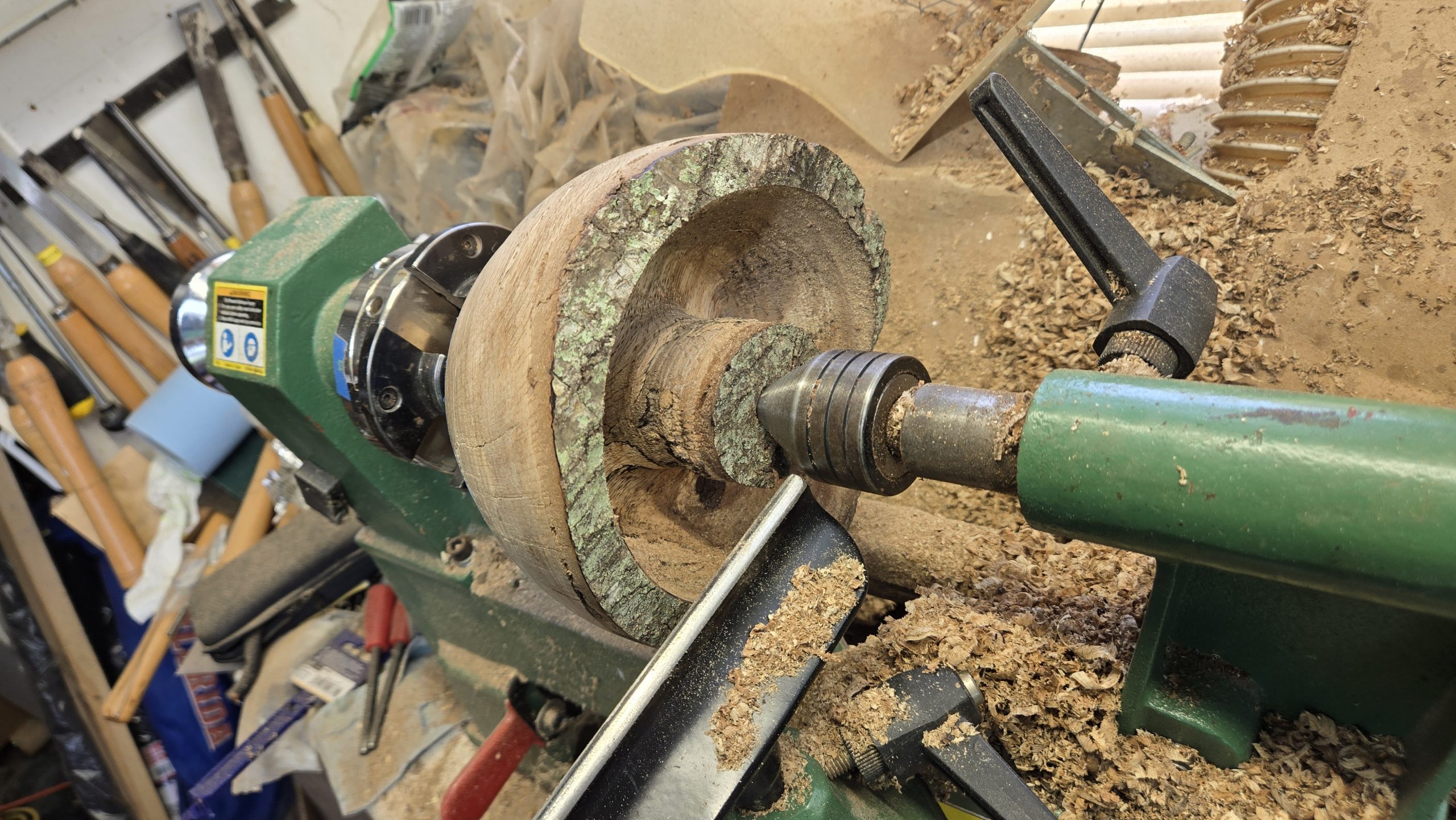
4) Hollow Out the Inside
Removing all that wood from the inside leaves most of the log as shavings on the floor.
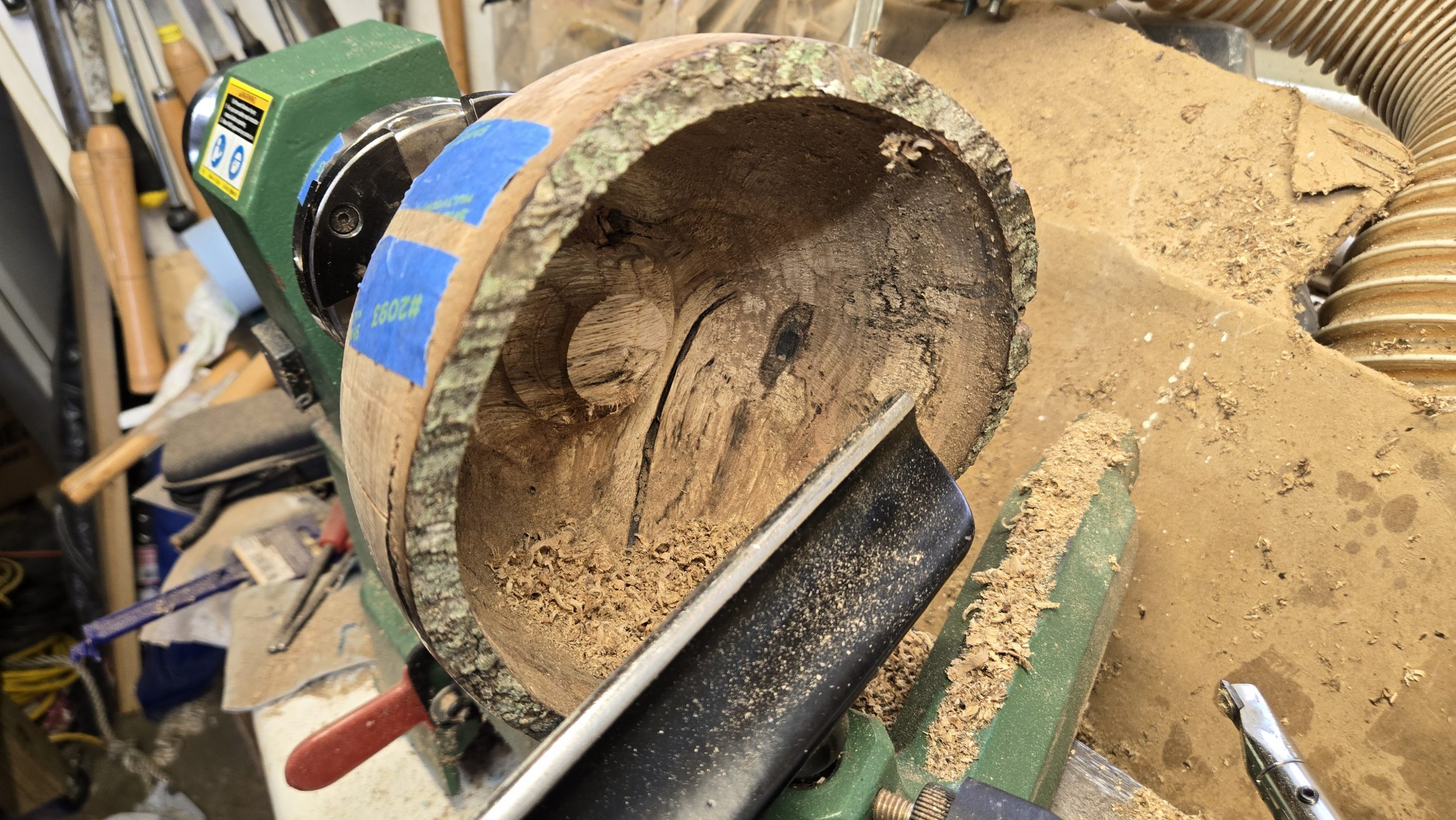
5) Almost Done
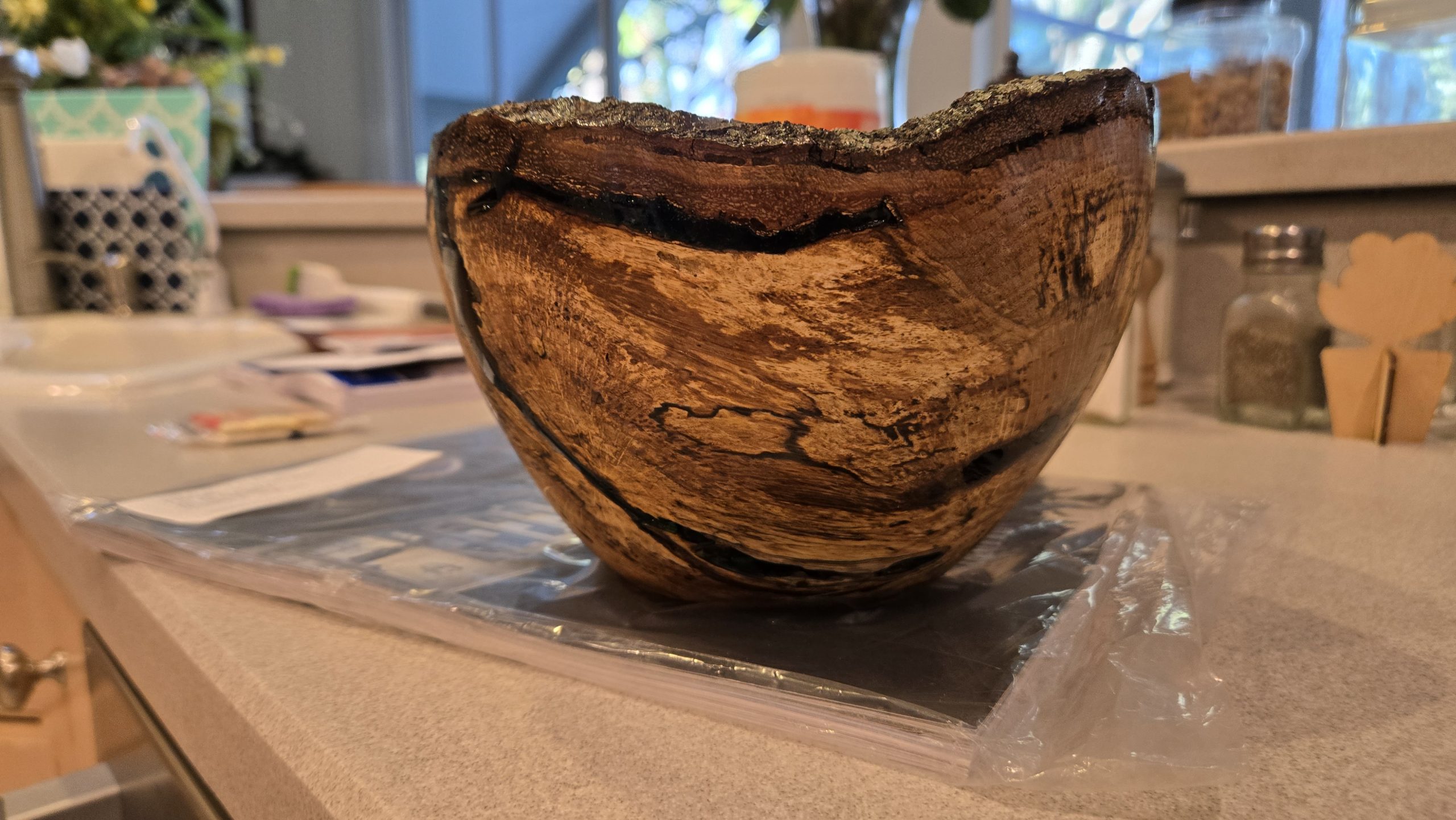
6) Lots of Sanding and Finishing
This rotted log was so unstable that a lot of epoxy was used to hold it together, and grabbing the bottom with an expanding chuck would have likely broken it apart. But the cracks and wormholes combined with the tinted epoxy make it more interesting when all sanded and finished.